Ming
Voice role-play for training managers, with multi-agent LLM characters.
- Backend and multi-agent architecture, about 20% of commits
- 4 people
- HackGT 12 (2025) — MLH Best Use of Gemini API, winner
- TypeScript, Next.js, Mastra, Gemini 2.5 Flash, Cloudflare Workers

What it is
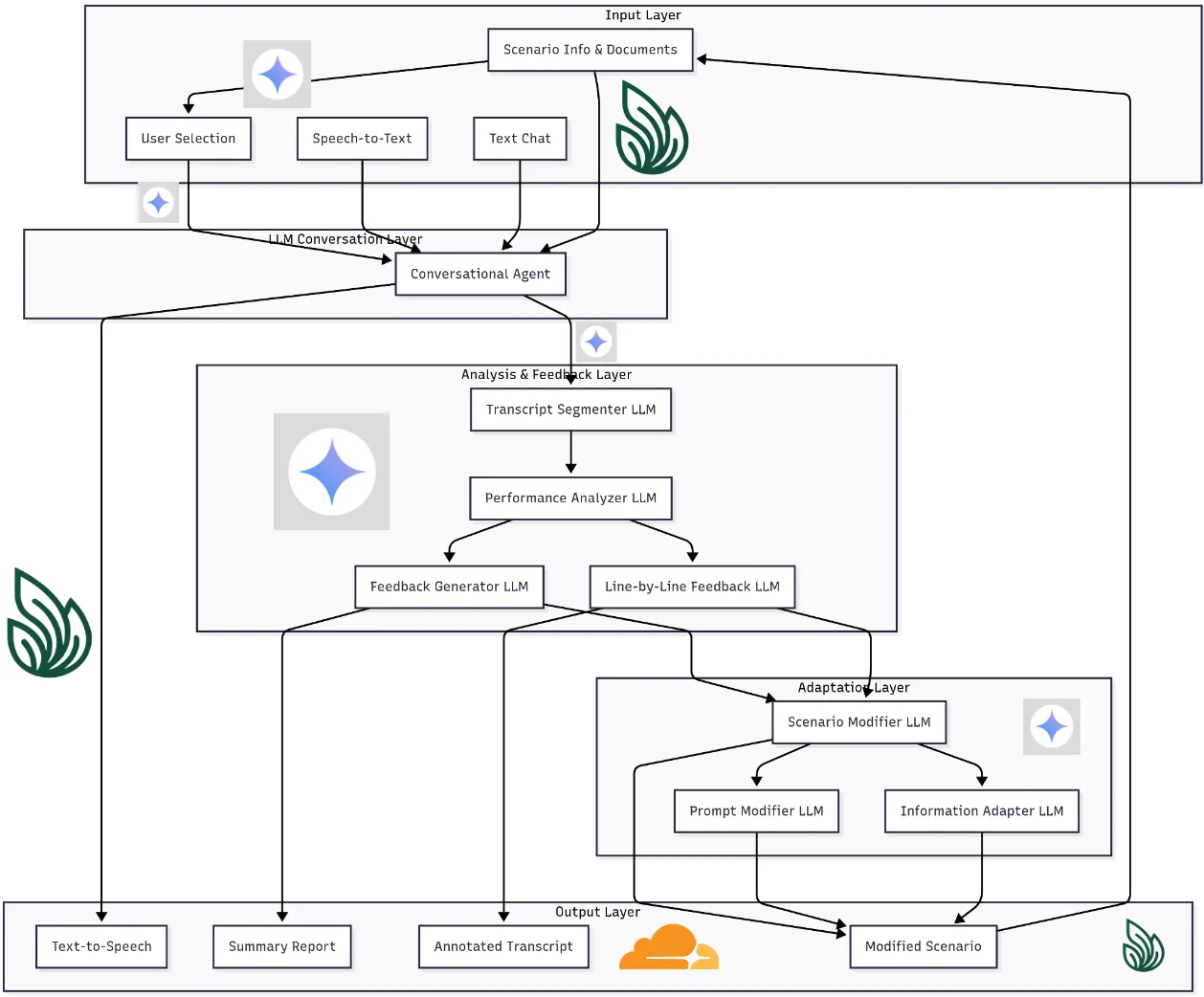
A new manager practices a difficult conversation, such as a talk about falling performance, by voice with an AI employee. Afterwards Ming scores the conversation and annotates the transcript line by line.
There are three agent roles: the manager (the user), the employee and a coach.
What I built
- The Mastra backend and the multi-agent architecture (55 of 275 commits).
- The feedback workflow: analyze the transcript, summarize it, then drill into the details, each step its own agent.
- The scenario pipeline: create the scenario, then the character prompts, then the reports.
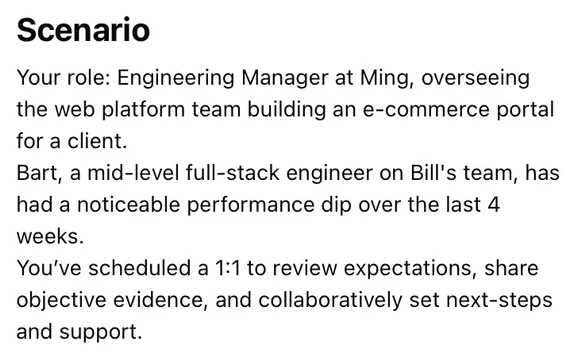
Detail The scenario brief. - The move to Gemini 2.5 Flash and the Cloudflare deploy.
Technical notes
Next.js and Mastra run as two separate servers, with the Next.js server pointed at Mastra.